Recruitment 3D Icons: Elevating HR Visuals for the Modern Era
In an increasingly digital-first world, the way businesses communicate their hiring processes has shifted dramatically. The days of sterile, flat graphics and generic stock photos are fading as companies strive to build authentic, engaging employer brands. At the forefront of this visual evolution is a new standard in design assets that balances professionalism with approachability. Recruitment 3D Icons have emerged as a critical tool for human resources teams, marketers, and designers who need to visualize complex talent management concepts without overwhelming their audience. These assets do more than just decorate a slide or a landing page; they serve as visual anchors that guide candidates through the often intimidating journey of applying for a job.
The demand for high-quality, three-dimensional imagery stems from a broader shift in user expectations. Today's job seekers, particularly those in the millennial and Gen Z demographics, expect digital experiences that feel tactile, modern, and trustworthy. A flat icon might convey information, but a well-rendered 3D asset adds depth, context, and a sense of polish that signals a company cares about its presentation. This is where specialized collections like the Recruitments 3D Icon Pack become indispensable. By offering a curated set of visuals specifically tailored to the hiring workflow, these packs allow professionals to maintain a consistent aesthetic while saving valuable time on custom modeling or endless searches through generic libraries.
The Shift from Flat to Depth in Professional Design
Design trends have always been cyclical, yet the recent surge in 3D elements feels distinctively different from previous iterations. In the past, 3D graphics were often heavy, hyper-realistic, and sometimes difficult to integrate into clean web layouts. However, the current iteration of 3D design focuses on softness, clarity, and integration. The Recruitment 3D Icons pack exemplifies this trend perfectly. Instead of harsh edges or overly complex textures, these assets utilize soft rounded shapes and clean geometry. This stylistic choice is not merely aesthetic; it serves a psychological purpose. Rounded forms are perceived as friendlier and less threatening, which is crucial when dealing with sensitive topics like employment status, identity verification, and application reviews.
The color palette plays an equally vital role in this evolution. The calm blue-white spectrum found in professional recruitment assets is a deliberate nod to trust and stability. Blue is universally associated with reliability, intelligence, and communication—three pillars of effective hiring. When combined with white space and subtle shadows, the result is a visual language that feels open and transparent. For businesses navigating a competitive talent market, these subtle cues can influence how a candidate perceives the organization before they even read the job description. It suggests a workplace that values clarity and order, setting the tone for the entire recruitment experience.
Visualizing the Talent Acquisition Workflow
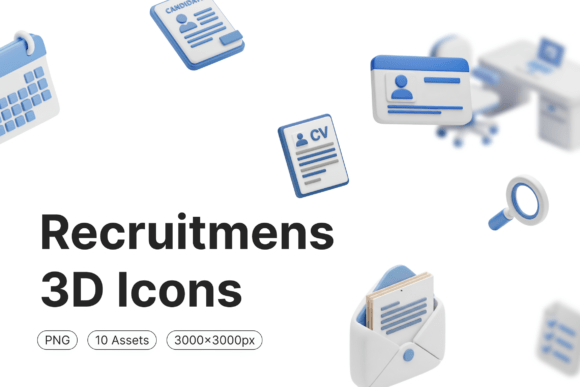
One of the most significant challenges in modern recruitment is explaining the process. From submitting a CV to attending an interview, the steps can feel abstract and disconnected to an external observer. Effective visualization bridges this gap. The Recruitments 3D Icon Pack addresses this by providing specific assets that map directly to key stages of the hiring funnel. With ten high-quality 3D assets included, the collection covers the essential narrative arc of talent acquisition.
- CV Documents: Representing the initial point of contact, these icons symbolize the submission of qualifications and the start of the relationship.
- Candidate Profiles: These assets help visualize the screening phase, where recruiters assess fit and potential.
- ID Cards: Essential for representing verification, onboarding, and the transition from applicant to employee.
- Calendars: Critical for scheduling interviews and managing timelines, these icons ground the process in reality.
- Search Icons: Symbolizing the active hunt for talent, whether through internal databases or external job boards.
- Envelopes: Representing communication, offer letters, and the ongoing dialogue between recruiter and candidate.
By using these specific symbols, HR professionals can create infographics, step-by-step guides, and interactive dashboards that make the hiring process feel manageable. For example, a "How to Apply" section on a careers page becomes significantly more engaging when each step is accompanied by a relevant, high-resolution 3D icon. This visual consistency reduces cognitive load for the user, allowing them to focus on the content rather than trying to decipher what an abstract shape means.
Practical Benefits for Creators and Businesses
For entrepreneurs, freelancers, and marketing agencies, time is the most valuable currency. Creating custom 3D models from scratch requires specialized software skills, rendering time, and a steep learning curve. Even finding suitable stock images can be a frustrating exercise in compromise, often resulting in mismatched styles or low-resolution files that look pixelated on high-density screens. The Recruitment 3D Icons collection solves these problems by offering assets that are ready to use immediately.
The technical specifications of this pack are designed for versatility. Each asset comes with a transparent background, making it effortless to overlay onto various designs, from PowerPoint presentations to mobile app interfaces. The resolution of 3000x3000px ensures that the icons remain crisp and sharp regardless of the display size, whether viewed on a large conference screen or a smartphone. This high fidelity is non-negotiable in today's market, where blurry graphics can instantly undermine a brand's credibility.
However, users should be aware of the nature of these assets. As PNG files, they are raster images, meaning the color and shape cannot be altered after download. While this might seem like a limitation to some, it is actually a feature for many. It ensures that the visual integrity of the design remains intact. The soft lighting, precise shadows, and balanced proportions are baked into the file, guaranteeing that every user gets the exact professional look intended by the designer. This consistency is particularly beneficial for teams working on large-scale branding projects where maintaining a uniform style across multiple touchpoints is essential.
Integrating 3D Assets into Modern Workflows
Incorporating Recruitment 3D Icons into your workflow does not require a complete overhaul of your design strategy. These assets are flexible enough to complement existing brand guidelines while adding a layer of modernity. For instance, if a company uses a strict corporate blue, the cool tones in the icon pack will likely blend seamlessly. If the brand uses warmer colors, the neutral blue-white base of the icons acts as a perfect counterpoint, preventing the overall design from becoming too saturated.
Consider the practical application in a remote work environment. Many HR teams now conduct virtual open houses or digital career fairs. In these settings, visual aids are the primary method of engagement. Using a slide deck populated with these high-quality 3D assets can make a virtual presentation feel more dynamic and less static than one relying solely on bullet points and text. Similarly, for social media campaigns aimed at attracting top talent, these icons can be used to create eye-catching carousels or short-form video content that stops the scroll.
The relevance of such tools extends beyond just aesthetics; it touches on the efficiency of communication. A well-designed visual can explain a concept faster than a paragraph of text. When a recruiter needs to explain the timeline of a hiring cycle, a sequence of calendar and envelope icons tells the story instantly. This efficiency is vital in a fast-paced business environment where attention spans are short and decisions are made quickly.
Looking Ahead: The Future of Recruitment Imagery
As technology continues to advance, the line between digital and physical experiences will blur further. Virtual reality (VR) and augmented reality (AR) are beginning to find their way into recruitment, offering immersive tours of office spaces and interactive job simulations. While we are not there yet for every company, the foundation is being laid by the adoption of high-quality 3D assets in traditional 2D mediums. The Recruitments 3D Icon Pack represents a stepping stone in this journey, preparing organizations to think in three dimensions.
The trend toward personalized, human-centric hiring will only grow. Candidates want to feel seen and understood, and visual design is a powerful medium for conveying empathy and understanding. The soft, approachable nature of these 3D icons aligns perfectly with this human-centric philosophy. They avoid the cold, robotic feel of early computer-generated imagery, opting instead for a warmth that invites interaction.
For businesses looking to stay ahead of the curve, investing in quality visual assets is no longer optional; it is a strategic necessity. The ability to present a polished, professional image can be the deciding factor for a top-tier candidate choosing between two similar offers. By leveraging tools like Recruitment 3D Icons, organizations can ensure that their visual language speaks volumes about their commitment to excellence, clarity, and respect for the people they hope to hire.
Ultimately, the value of this icon pack lies in its ability to simplify the complex. It takes the multifaceted, often stressful process of recruitment and distills it into clear, beautiful, and understandable visuals. Whether you are a solo freelancer building a personal brand or a global corporation managing thousands of applicants, the right visual tools can make all the difference. In a world where first impressions are formed in milliseconds, ensuring that your recruitment materials are as compelling as your job opportunities is the smartest investment you can make.