Transforming Spaces with 3D Welcome Decor Laser Cut Designs
In the evolving landscape of interior design and personalized gifting, the intersection of digital craftsmanship and physical aesthetics has created a new category of home decor. Among these innovations, the 3D Welcome Decor Laser Cut stands out as a versatile solution for individuals seeking to add character to their entryways, offices, or event spaces. Unlike traditional mass-produced signage, this approach leverages precision engineering and layered depth to create visual interest that flat surfaces simply cannot achieve. For makers, business owners, and DIY enthusiasts, understanding the mechanics and potential of these designs is the first step toward creating something truly unique.
The Mechanics of Depth in Digital Design
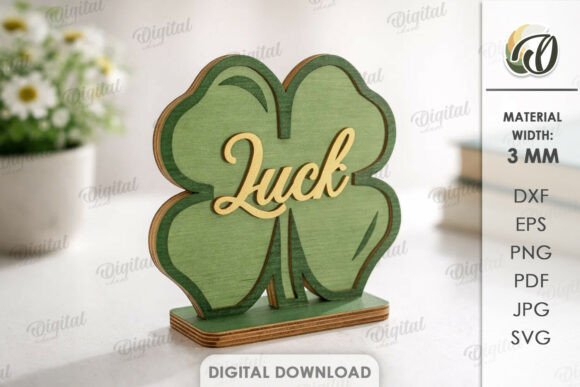
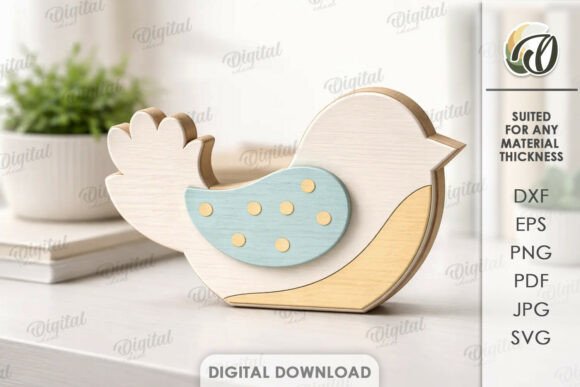
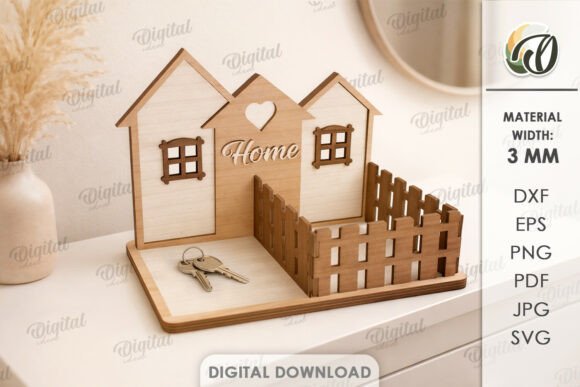
At its core, a 3D Welcome Decor Laser Cut project begins not in a workshop, but on a computer screen. The term "3D" in this context does not refer to a solid block of material carved by a robot arm, but rather to the strategic layering of two-dimensional slices. By designing multiple layers that stack upon one another, creators can simulate depth, shadow, and dimensionality. This technique transforms a simple greeting into a sculptural piece that interacts with light and perspective.
The process relies heavily on vector graphics. When a designer creates a file intended for laser cutting, they are essentially mapping out the exact paths a laser beam will follow. For a multi-layered welcome sign, this involves creating separate vectors for each tier of the design. The outermost layer might be a large, bold outline of the word "Welcome," while subsequent inner layers provide texture, patterns, or secondary text. When these layers are cut from materials like wood, acrylic, or MDF and stacked with precise spacing, the result is a tangible three-dimensional object.
This method offers a significant advantage over traditional carving: efficiency. A laser cutter can slice through intricate patterns at high speeds without the need for manual chiseling or sanding. However, the true artistry lies in the digital preparation. The alignment of these layers must be mathematically perfect to ensure that when the physical pieces are assembled, the edges align seamlessly. This is where the specific file formats provided in digital packages become crucial. Formats such as SVG (Scalable Vector Graphics) and DXF (Drawing Exchange Format) preserve the geometric integrity of the design, allowing users to scale the project up or down without losing resolution or distorting the proportions.
Material Considerations for Layered Projects
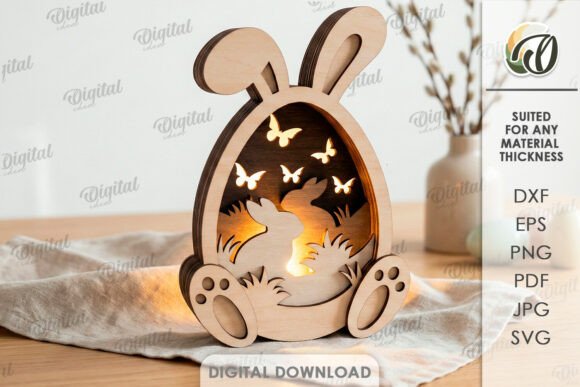
While the digital files dictate the shape, the choice of material defines the final aesthetic. Wood remains the most popular substrate for 3D Welcome Decor Laser Cut projects due to its warmth and natural grain. Birch plywood is often favored for its clean edges and resistance to warping, while hardwoods like maple or walnut offer a premium look suitable for luxury interiors. Acrylic provides a modern, translucent alternative, allowing light to pass through the layers for a glowing effect when backlit.
The thickness of the material also plays a pivotal role in the perceived depth. A standard 3mm sheet might yield a subtle lift, whereas stacking multiple 6mm layers can create a dramatic, architectural presence. Creators must consider how the laser interacts with different densities; some materials require slower cutting speeds to prevent burning, which can leave dark char marks on the edges. In many cases, a slight amount of post-processing, such as sanding or applying a stain, is necessary to enhance the natural beauty of the material and hide any minor imperfections from the cutting process.
Strategic Applications Across Different Environments
The versatility of these designs extends far beyond the front door of a residential home. Because the underlying technology is based on scalable vector data, a single design file can be adapted for various scales and contexts. This adaptability makes the 3D Welcome Decor Laser Cut concept relevant for a wide array of professionals and hobbyists.
For small business owners, particularly those running boutique shops, cafes, or salons, custom signage is a critical branding tool. A generic store-bought sign often fails to convey the unique personality of a brand. By utilizing a layered laser-cut design, a business can create a focal point that reflects its identity. Imagine a coffee shop where the "Open" sign features layered latte art patterns, or a bakery where the "Welcome" sign incorporates intricate pastry motifs. These details invite customers in and suggest a level of care and attention that permeates the entire customer experience.
Event planners and decorators also find immense value in this medium. Weddings, corporate galas, and birthday parties often require temporary installations that look expensive but do not break the budget. Since the designs are digital, they can be customized with names, dates, or specific themes instantly. A wedding entrance featuring a massive, multi-layered "Just Married" sign made from sustainable bamboo or reclaimed wood adds a rustic-chic element that photographs beautifully. The ability to produce these items on-demand means less waste and more flexibility compared to ordering pre-made plastic signs.
Even in educational settings, these designs serve a dual purpose. Schools and universities can use them to label classrooms, libraries, or administrative offices with a sense of permanence and style. Furthermore, the creation process itself serves as an excellent teaching tool for students interested in STEM fields. Understanding how a digital file translates into a physical object introduces concepts of geometry, material science, and manufacturing processes. It bridges the gap between abstract coding and tangible results, making it a valuable resource for educators looking to integrate maker culture into their curriculum.
The Shift Toward Digital-First Crafting
A fundamental shift in the crafting industry is the move away from owning heavy machinery to purchasing digital assets. This trend empowers a broader audience to participate in high-quality production. With a 3D Welcome Decor Laser Cut digital package, the barrier to entry is significantly lowered. Consumers no longer need to be expert designers; they only need access to a laser cutter or a local fabrication service.
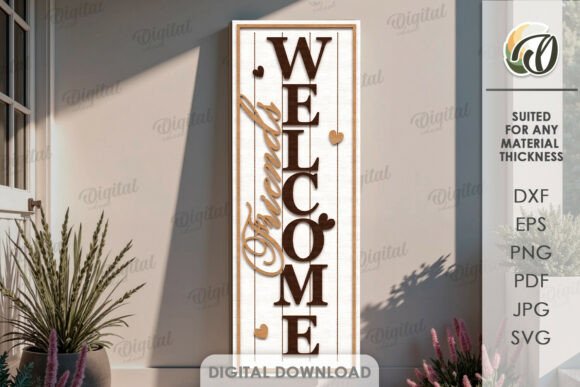
It is important to clarify the nature of these transactions. When purchasing a design file, the buyer is acquiring a license to use the intellectual property, not a physical product. The photos accompanying these listings are strictly for inspiration, showcasing what is possible when the files are executed correctly. The actual deliverable is a zip folder containing a suite of compatible file formats—SVG, DXF, EPS, PDF, JPEG, and PNG. This variety ensures compatibility with almost any design software or laser cutter control system currently on the market.
For the professional fabricator, this model allows for rapid prototyping and customization. They can take a base design, modify the text to suit a client's request, adjust the dimensions to fit a specific wall space, and send it directly to the machine. The inclusion of raster formats like JPEG and PNG is particularly useful for previewing the design before committing to the cut, allowing clients to visualize the final outcome digitally. This workflow reduces errors and minimizes material waste, contributing to a more sustainable manufacturing process.
Optimizing the Workflow for Success
To maximize the potential of these digital assets, users should familiarize themselves with the nuances of their chosen software. While SVG is the gold standard for web-based and modern laser cutting software, older machines may still rely on DXF files. Having both ensures that the project is not stalled by technical incompatibilities. Additionally, understanding the difference between cut lines and engrave areas is essential. Some designs include intricate textures meant to be etched into the surface rather than cut through, adding another layer of detail to the final piece.
Assembly is the final, often overlooked, stage of the process. While the laser cuts the individual layers, the creator must decide on the best method to join them. Adhesives, mechanical fasteners, or even magnetic mounts can be used depending on the weight of the material and the desired permanence of the installation. For outdoor applications, weather-resistant glues and sealants are non-negotiable to protect the wood or acrylic from the elements. Indoor pieces, conversely, might benefit from lighter assembly methods that allow for easy removal or reconfiguration.
Empowering Creativity Through Accessibility
The rise of digital design files represents a democratization of creativity. It allows a parent to make a personalized gift for a child's room, a teacher to decorate a classroom, or an entrepreneur to brand a new storefront, all using the same foundational resources. The possibilities for creation are indeed endless, limited only by the imagination of the user and the capabilities of their equipment.
As technology continues to advance, we can expect to see even more sophisticated interactions between digital design and physical output. New materials, smarter software, and more accessible hardware will further expand the horizons of what is possible with 3D Welcome Decor Laser Cut projects. Whether you are a seasoned professional looking to streamline your production line or a curious hobbyist taking your first steps into laser cutting, the availability of high-quality digital templates provides a robust foundation for success.
By embracing this digital-first approach, creators gain the freedom to experiment, iterate, and refine their work without the constraints of traditional manufacturing. The result is a world where every home, office, and public space can reflect the unique personality of its inhabitants through bespoke, handcrafted decor. As you explore these options, remember that the journey from a digital file to a stunning physical reality is just a few clicks and a careful cut away.